Why the Best Learning Still Needs Human Teachers in the Age of AI
 August 24th
- 7 hours ago
-
Academic Tutoring
-
Share this post
 August 24th
 7 hours ago
AI Is Revolutionizing Education—But It Shouldn’t Replace Teachers
Artificial intelligence is changing education at an incredible pace. From answering homework questions and explaining difficult concepts to creating personalized study plans, AI-powered learning tools have become a regular part of many students’ academic lives. Some schools have even begun building learning models around AI, promoting the technology as a way to reduce or even replace traditional classroom teaching.
These developments have led many people to wonder whether human teachers will eventually become unnecessary.
The answer, however, is more complex than it may seem.
Artificial intelligence is undoubtedly one of the most powerful educational tools ever created. It can personalize lessons, provide instant feedback, and make learning available anytime. Yet education is about much more than delivering information. Students also need guidance, encouragement, critical thinking, collaboration, and emotional support—qualities that remain uniquely human.
Rather than replacing teachers, AI has the greatest potential when it works alongside them. Research increasingly suggests that the most effective learning environments combine the speed and adaptability of technology with the experience, judgment, and compassion of skilled educators.
The Rise of AI in Modern Classrooms
Only a few years ago, educational technology was largely limited to online quizzes, recorded lectures, and digital textbooks. Today’s AI systems are far more interactive. Students can ask follow-up questions, receive customized explanations, practice difficult topics repeatedly, and even get help preparing for exams.
This accessibility has transformed the way many people study. A student struggling with algebra can receive step-by-step guidance within seconds. Someone learning a new language can practice conversations at any time of day. AI makes individualized support available without waiting for classroom hours or tutoring appointments.
For schools facing teacher shortages or growing class sizes, these capabilities appear especially attractive. AI offers the possibility of expanding educational support without dramatically increasing staffing costs.
However, convenience alone does not determine educational quality.
Learning Is More Than Finding the Right Answer
One common misconception about education is that its primary goal is simply transferring knowledge from teacher to student. While mastering academic content is important, successful education develops a much broader set of skills.
Students must learn how to ask thoughtful questions, evaluate evidence, communicate clearly, collaborate with others, and solve unfamiliar problems. They also develop confidence, resilience, and the ability to learn independently.
These outcomes often emerge through conversations, group activities, classroom discussions, and personal relationships rather than through information alone.
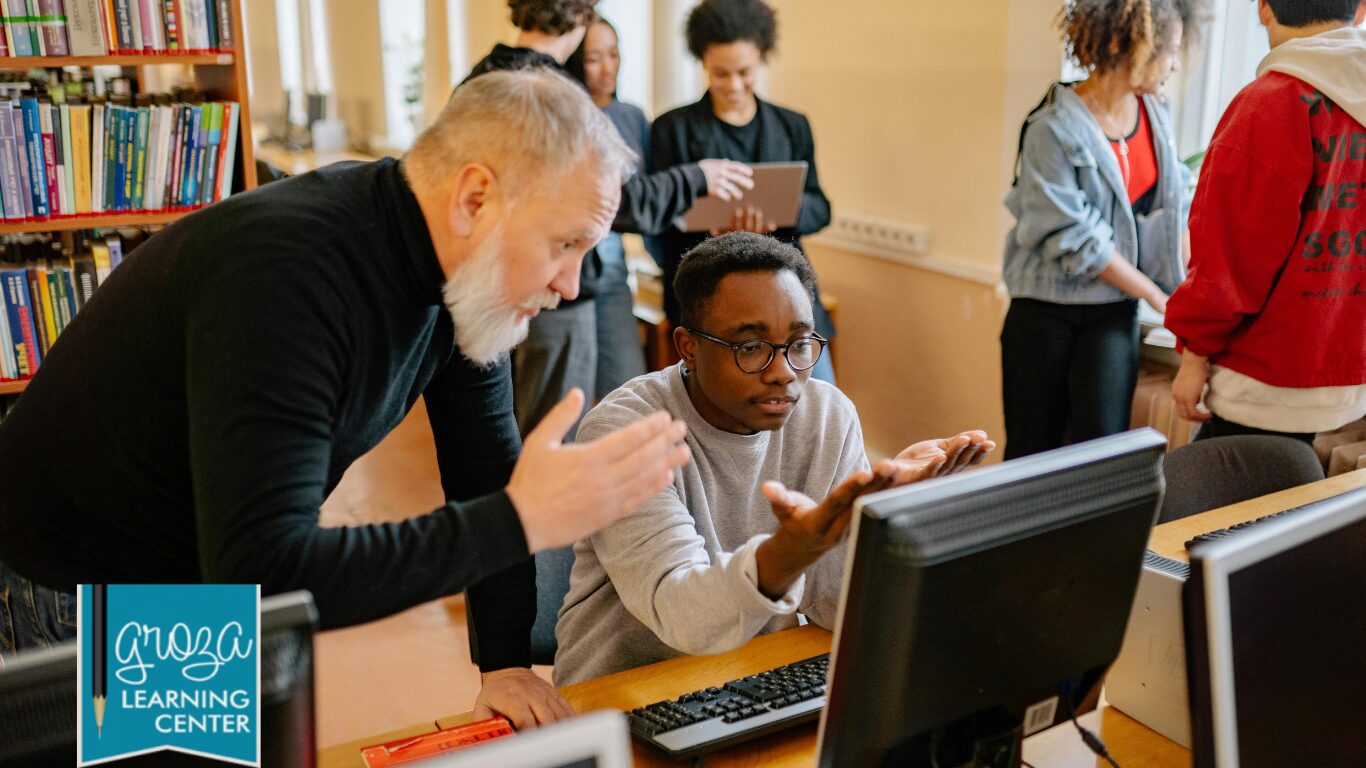
A teacher does far more than explain facts. Great educators challenge students to think critically, encourage them through setbacks, and recognize when someone needs additional support. They adapt not only to academic performance but also to individual personalities and emotional needs.
These human interactions remain difficult for AI to replicate.
Where AI Excels
Although AI should not replace teachers, it excels in several important areas that can improve learning.
Personalized Instruction
Students rarely learn at the same pace. In a classroom, teachers often balance the needs of advanced learners with those who require additional practice. AI helps bridge this gap by adjusting explanations based on each student’s responses.
If a learner struggles with fractions, the system can provide simpler examples before moving to more advanced problems. Students who master a concept quickly can immediately progress without waiting for the rest of the class.
This flexibility helps create a more personalized learning experience.
Immediate Feedback
Waiting days for graded assignments can slow the learning process. AI provides feedback almost instantly, allowing students to identify mistakes while the material is still fresh in their minds.
This rapid response encourages active learning and helps prevent misunderstandings from becoming long-term habits.
Unlimited Practice Opportunities
Practice is essential for developing academic skills, especially in mathematics, science, and language learning. AI systems can generate nearly endless practice exercises tailored to a student’s current ability.
Instead of working through the same worksheet repeatedly, students receive fresh questions that reinforce the concepts they need most.
Flexible Access
Not every student learns best during regular school hours. AI makes educational support available whenever students are ready to study, whether early in the morning or late at night.
This accessibility can be especially helpful for adult learners, working students, or anyone balancing education with other responsibilities.
The Strengths That Only Teachers Bring
While AI performs many instructional tasks efficiently, teaching involves qualities that extend beyond technology.
Building Trust
Students often perform better when they feel supported by someone who believes in their potential. Teachers create learning environments where students feel safe asking questions, making mistakes, and taking intellectual risks.
This trust develops over time through genuine human interaction.
Although AI can simulate conversation, it cannot replace authentic relationships built on shared experiences and mutual understanding.
Recognizing Individual Needs
Every classroom includes students with different learning styles, backgrounds, interests, and challenges. Experienced teachers notice subtle changes that software may overlook.
A student who suddenly stops participating may be dealing with stress at home. Another may understand the material but lack confidence. Others may need encouragement rather than additional explanations.
Teachers adjust their approach based on these observations, creating a more responsive learning environment.
Inspiring Curiosity
Great educators often leave lasting impressions because they inspire curiosity rather than simply delivering information.
An enthusiastic science teacher can spark a lifelong interest in engineering. A passionate literature instructor may encourage students to become writers. History comes alive when teachers connect past events to present-day issues.
This ability to inspire is one of the defining characteristics of exceptional teaching.
Research Supports Collaboration, Not Competition
As AI becomes more common in education, researchers continue studying its effectiveness.
The results are encouraging but nuanced.
Many studies show that AI tutoring systems improve student performance when used as supplemental learning tools. Personalized instruction and immediate feedback often help students strengthen their understanding of difficult subjects.
However, there is little evidence that AI consistently produces better educational outcomes than experienced human teachers working in well-designed classrooms.
One reason is that education involves multiple dimensions beyond academic achievement. Student engagement, motivation, collaboration, creativity, and emotional development all contribute to long-term success.
These areas continue to benefit from human guidance.
As a result, many education experts recommend integrating AI into classrooms rather than viewing it as a replacement for educators.
What the Classroom of the Future May Look Like
Instead of eliminating teachers, AI is likely to reshape their role.
Teachers may spend less time grading assignments, creating worksheets, or preparing repetitive instructional materials. AI can assist with many of these administrative tasks, freeing educators to focus on higher-value interactions.
Future classrooms may include AI-powered tools that:
- Generate customized practice exercises.
- Identify learning gaps through student performance data.
- Suggest instructional strategies.
- Translate learning materials into multiple languages.
- Provide extra support for students outside classroom hours.
Meanwhile, teachers continue leading discussions, mentoring students, encouraging collaboration, and helping learners apply knowledge in meaningful ways.
In this model, technology enhances education without replacing the people who make learning meaningful.
Teaching Students How to Use AI Responsibly
As AI becomes increasingly common, digital literacy is becoming just as important as traditional academic subjects.
Students need to understand both the strengths and limitations of AI.
For example, they should learn how to:
- Verify AI-generated information.
- Recognize potential inaccuracies.
- Use AI as a study aid rather than a shortcut.
- Cite sources appropriately.
- Protect personal privacy when using online tools.
- Think critically instead of accepting every answer automatically.
These lessons require guidance from educators who understand responsible technology use.
AI can answer questions, but teachers help students become thoughtful decision-makers.
Preparing for an AI-Driven Workforce
The future workplace will likely involve regular collaboration between humans and AI systems across many industries.
Employers increasingly value skills that technology cannot easily replace, including:
- Communication
- Leadership
- Teamwork
- Creativity
- Ethical reasoning
- Adaptability
- Emotional intelligence
Schools play an essential role in helping students develop these abilities.
By combining traditional instruction with responsible AI use, educators can prepare learners for careers that require both technical knowledge and human judgment.
Conclusion
Artificial intelligence is transforming education in remarkable ways. It offers personalized instruction, immediate feedback, unlimited practice opportunities, and around-the-clock access to learning. These advantages make AI an incredibly valuable educational resource.
Yet education has always been about far more than delivering information.
Students need mentors who encourage them, challenge their thinking, recognize their struggles, and celebrate their growth. They benefit from classrooms where curiosity is nurtured, collaboration is encouraged, and learning becomes a shared human experience.
Current research suggests that AI works best not as a replacement for teachers but as a partner in the learning process. When educators use AI thoughtfully, they can provide more individualized instruction while spending more time on what matters most: connecting with students.
The future of education is unlikely to be a choice between humans and machines. Instead, it will be built on collaboration, where technology enhances teaching without replacing the empathy, wisdom, and inspiration that only people can provide.
By embracing both innovation and human connection, schools can create learning environments that prepare students not only to succeed academically but also to thrive in an increasingly digital world.

Tatyana Yukhtman is the founder and director of Groza Learning Center. A Harvard Kennedy School and UCLA graduate with over 25 years in education, she has helped thousands of LA students build the executive functioning skills they need to succeed.

Want to learn more about Our
If you prefer to schedule a call, click here to book a consultation
 Similar Articles